
Animal Acupuncture
For Cats and Dogs
What is Acupuncture?
Acupuncture is a unique therapeutic treatment which has been used on animals and humans for over 4500 years. It is one of the chief modalities used in Traditional Chinese Medicine (TCM), along with herbs and massage. Acupuncture has been used on animals in the West since coming to America in the 1970s and its use has been spread by dedicated veterinarians since. Acupuncture aids the body’s ability to repair itself. By inserting fine needles into specific points in the body homeostasis (balance) and relief from illness and pain is achieved.
Acupuncture can be thought of as bridging the gap between medicine and surgery. It is often used when an animal is no longer responding to medications or where potentially surgery is not feasible, i.e. in situations where the risks involved with surgery outweigh the potential benefits. In China acupuncture is often used as the primary treatment prior to conventional medicines and surgery.

What Conditions Benefit From Acupuncture?
The answer to this is very much everything, although some conditions are more responsive than others. All painful conditions will gain relief through acupuncture. The pain associated with arthritis and intervertebral disc disease is very well managed with acupuncture. Cancer pain can be alleviated also. The American Animal Hospital Association (AAHA) fully endorses the use of acupuncture for pain management in animals.
There are many medical conditions that will benefit from acupuncture where there has been limited success with conventional medical therapy e.g. inflammatory bowel disease. Similarly geriatric animals do amazingly well with acupuncture and will regain energy and vigour through treatments. Many people express how much geriatric animals start to play again and interact with the family.
The list of conditions that can benefit from acupuncture is extensive.
Below is a video of a very happy Greyhound after a few pet acupuncture sessions at Acupet.
Musculoskeletal
Arthritis, hip dysplasia, long term injuries, muscular strains / sprains, muscle spasms, Myofascial Trigger Points, iliopsoas myopathy, general back pain, spondylosis deformans.
Renal
Acute and chronic renal failure, kidney infections, Feline Lower Urinary tract Disease (FLUTD), urinary incontinence, repeated bladder infections (cystitis), idiopathic cystitis, recurring problems with bladder uroliths (stones), urinary incontinence
Cardiovascular
Congestive heart failure, arrythmias(supportive therapy additional to conventional medications.), hypertension.
Immune
Plasmacytic -lymphocytic gingivitis in cats, additional support for Immune Mediated Haemolytic Anaemia.
FELV, FIV in cats.
Reproduction
Infertility, problems associated with parturition.
Skin
Lick granulomas, skin allergies, chronic pyodermas, immune mediated skin disorders.
Neurological
Intervertebral disc disease (IVDD), traumatic nerve injuries, certain types of paralysis (eg facial and radial nerve paralysis), seizures, paresis (weakness), wobbler syndrome, degenerative myelopathy, fibrocartilaginous emboli. Any kind of neuropathic pain (nerve related)
Spinal cord injuries, as occurs in intervertebral disc disease, respond very well when acupuncture is used in the early stages and have shown similar success rates to surgery in some studies.
Respiratory
Chronic bronchitis in dogs, asthma in cats, chronic sinusitis. Useful adjunct to treatment of pneumonia.
Eye Conditions
Conjunctivitis, Dry Eye (Keratoconjunctivitis Sicca).
Ear Conditions
Chronic otitis externa, middle ear infections, deafness.
Gastrointestinal
Acute and chronic diarrhoea, inflammatory bowel disease, constipation, acute and chronic vomiting, abdominal pain (inclusive of cancer related pain), regurgitation.
When Can Acupuncture Be Used?
Acupuncture can be used to help with many conditions, in chronic and acute cases. It can be combined with conventional medicine and surgery for supportive treatment of a condition or used, in some cases, as the sole treatment. It can be used where an animal has responded poorly to conventional medicine or where the side effects of conventional medicine outweigh the benefits and so cannot be used. For example, older dogs are more prone to suffer from arthritis and unfortunately many have underlying kidney and liver disease which eliminates nonsteroidal anti-inflammatory treatment from being used for pain control. Acupuncture may then be used to provide pain relief and anti-inflammatory action. Acupuncture is the ultimate form of holistic treatment as the whole animal is looked at and multiple conditions can be treated at once.
Acupuncture may also be used where surgery is not feasible, such as where the risks of the procedure may outweigh the benefits or potentially where surgery is too expensive to be an option
Chronic or Acute Conditions
Combined with conventional medicine or alone
When holistic treatment is desired
Where surgery is not feasible
The Effects of Acupuncture on Your Animal
- Stimulation of the body’s immune system – antibody levels and white blood cells have been shown to increase with stimulation of certain points.
- Pain relief – acupuncture stimulates the release of endorphins which are the body’s potent pain relief system.
- Motor recovery in some paralysed animals
- Repair of damaged nerves and areas of the spinal cord.
- Reduction or elimination of muscle spasm.
- Anti-inflammatory effects.
- Sedation – the brain’s dopamine levels increase which leads to sedation.
- Psychological effects – the release of endorphins, serotonin and other transmitters in the brain lead to a calmer patient.
- Homeostasis (balance in the body) – there can be further effects on respiration, heart rate and blood pressure.
- Depending on points used contractions of the uterus can be promoted which may help with labour.
These effects all occur simultaneously and are complimentary to one another. The overall effect of acupuncture is that these actions all collaborate to return the body to homeostasis and health.
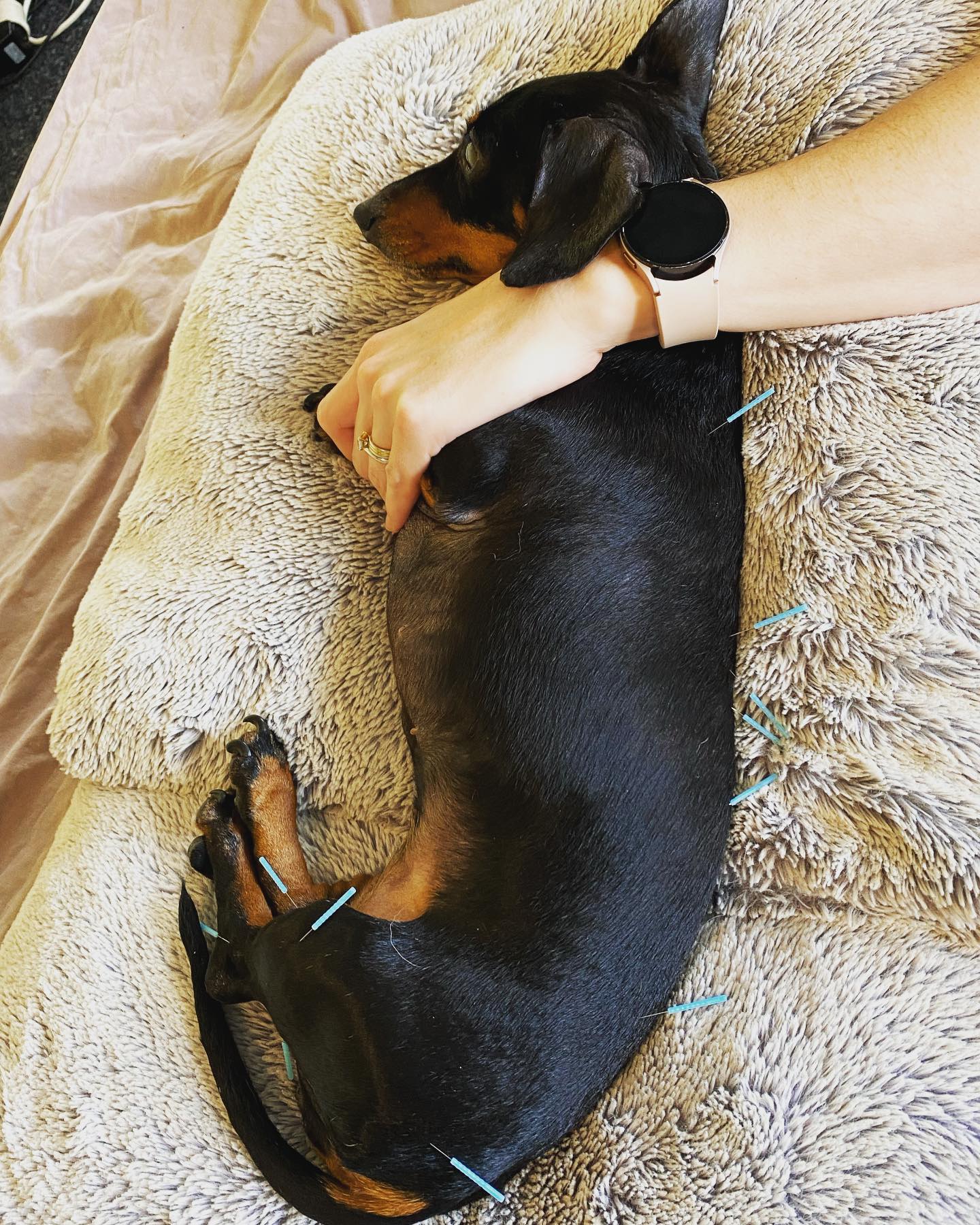
Ready To Get Your Pet Some Relief?
Get in touch with us to see if acupuncture is the right treatment for your pet.
Frequently Asked Questions
What happens when I bring my dog or cat to Acupet?
A thorough veterinary examination is initially conducted and any history from your previous vet including blood tests and x-rays are reviewed. If the initial veterinary examination carried out reveals the need for further diagnostic imaging or a follow up on other problems that are found during the examination ( e.g. a skin mass) you will be referred back to your usual general practice for this.
Following a conventional examination, your cat or dog is then examined using the Traditional Chinese Veterinary Medicine approach which involves particular attention to the tongue and the pulse. Muscles and joints are given full attention as changes in muscle size, stiffness and pain can indicate which meridians are affected and what points need to be included in treatment. An important part of the consultation involves questions about your pet which focus on his or her emotional state, diet and the environmental conditions which make the condition worse (i.e. worse in hot, cold or damp conditions?) Anything you can think of related to your animals condition, whether it be different smells about your pet you have noticed or particular times of the day his or her condition may be worse, is worth mentioning to help ascertain the cause of disharmony in the body.
We will ask you to complete a History form for your pet before your consult.
How does Acupuncture work?
There are two ways to understand acupuncture, these being the Western or Eastern explanations. There has been an extraordinary amount of scientific research conducted to understand its physiological effects while Traditional Chinese Medicine (TCM) has its own remarkable way of explaining its effects on the body.
It has been found acupuncture points have a close connection to nerves and the vast amount of research shows acupuncture works by stimulating the central nervous system. This stimulation leads to the release of many chemicals and hormones which affect a vast number of biochemical and physiological changes in the body. As a result there is a synergistic spectrum of effects on the musculoskeletal, cardiovascular, hormonal and immune systems as well as psychological effects.
See above, some of the effects of acupuncture.
Eastern tradition states that the body is energy as well as matter (organs, muscles, bones, fascia, skin) and illness occurs when blockages to the flow of energy or depletion of energy occur. Traditional Chinese Medicine (TCM) acknowledges a system of pathways called meridians that run throughout the body linking the external areas of the body, such as muscles and skin, with the internal organs. These meridians are said to carry “vital energy” called Qi. Where Western medicine looks for a specific cause and treats that cause by medication or surgery, TCM looks for a pattern of disharmony or imbalance in the body caused by blockages that disrupt the flow of Qi or lead to deficiencies of Qi. TCM then utilises specific acupuncture points to “re-balance” the patient. The conventional approach and TCM both work very well together and both have a role to play in the treatment of an animal. Acupuncture can be particularly helpful in providing relief from conditions where conventional medicine is no longer providing results. It is fantastic for geriatric patients. In many older animals that have acupuncture for arthritis many owners report an increased energy level and wellness to the point some dogs start playing like puppies again and become much more engaged with life!
How many treatments will be needed?
Once a treatment plan is established there can be anywhere from one to two treatments weekly for three to six weeks for acute conditions. Chronic conditions can respond more slowly and are generally done weekly for six to eight treatments. It may take at least four sessions before there is a real difference for chronic conditions. Treatments generally end once no further improvements are seen and then maintenance sessions are used every one to three months to keep symptoms at bay.
Sessions will usually take 60 to 75 minutes. It is important that a calm and positive environment is created for your companion so that they can relax during treatment and allow needles to be maintained for the correct time period.
Fine gauge needles are inserted but other modalities such as moxa cigars (burnt to release warmth) and laser therapy for more needle-phobic patients may be used.
Does it hurt?
Acupuncture is relatively painless. There may be a brief moment of sensitivity as the needles penetrate the skin but most animals relax during treatment to the point of falling asleep. The very fine gauge needles are non-cutting and simply part tissues when placed. Acupuncture points are also known to be less reactive to pain. Most animals start to love the “feel good” effect of acupuncture but it usually takes a couple of sessions for animals to feel very relaxed with needle insertion. But, as with some people, some animals may just not take to it at all. In this case laser therapy may be trialled and in time the dog or cat may be more accepting of needles. Also during therapy, moxa may be used. Moxa is a warming herb used to stimultate acupuncture points and animals find this very soothing.
What changes will I see in my dog or cat?
A few things may occur after treatment:
- There may be no obvious changes but your animal seems brighter with possibly more energy.
- The symptoms may worsen over 24-48 hours before improving.
- The symptoms improve directly after treatment.
The more chronic the condition generally the more treatments will be needed to see relief from symptoms.
It is always good to keep a record of changes in your animal at home. It can be interesting to see how far they come and to see changes you never expected i.e. increased energy levels, a more lustrous coat and brighter eyes are common effects. Also when new symptoms develop knowing when and under what conditions they appeared is helpful for adjusting treatment where needed.
“I have been taking my boy Frankie to Acupet for pet acupuncture and rehab since his surgery for IVDD January 2023. Kym’s knowledge and care is second to none, she looks at his overall health and wellbeing and helps you to form a plan of action. Frankie has had acupuncture, laser therapy and we have had multiple herbal medicines to assist his journey. He’s making great progress and this would not have been possible without Kym! Frankie and I love our sessions with you and I couldn’t recommend Acupet more highly!“
Candice Baker
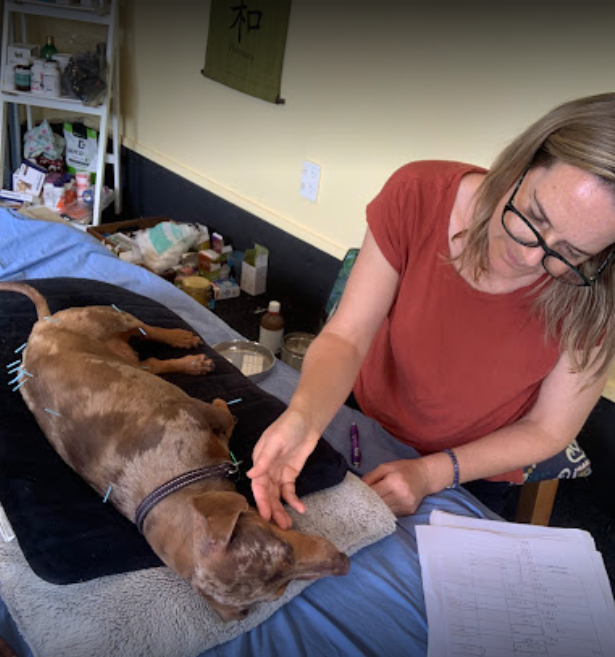
“Kym at Acupet has been a life saver for our miniature dachshund Latte. She has given additional years of life for our little fellow with my family. We have been taking our Latte to Kym from 2020. Latte lost the use of his back legs in 2020 and started dragging his feet. After being told of surgery by other vets, we were reluctant as to the recovery rates and the lengthy rehabilitation period. We did a lot of research and found out people have been doing acupuncture on similar cases with success in other parts of the world. A search in NZ for animal acupuncture led us to Kym. We had a few sessions with Kym and could see improvements on Latte’s condition almost straight away. He started regaining the use of his legs after a few months with acupuncture, the Chinese meds that Kym prescribed and the physio work she advised us to do at home. Our Latte has successfully regained the use of this back legs. He still continues maintenance acupuncture even today and we are happy to have our boy back with us.”
Seth Sires

“Kym at Acupet has been caring for my dog, Oakley, for almost two years using various methods to manage her pain and inflammation associated with arthritis and spondylosis, as naturally as possible. I can’t recommend Kym enough, she is knowledgeable, compassionate, patient (especially with my wiggly spaniel!) and very thorough in her approach, so I know Oakley is getting the best care possible.
Since starting therapy Oakley’s gait, range of motion, exercise tolerance as well as quality of life has improved significantly.
Oakley is able to continue living her best life, enjoying walks and adventures all thanks to Kym, I truly don’t know where we would be today without her!
Thank you so much for all your help Kym, Oakley and I are forever grateful 🐾🐾“
Jessica Odgers
Start Your Pets Journey To Wellness
We are here to support your pets way to a better quality of life with benefits of animal acupuncture.