Probiotics: Nature’s little helper
Sometimes when I’m out gardening I feel like I am on an archeological dig site. I’ll be turning over the soil and suddenly an old rotting beef bone will appear from the ground that Jack, my dog, had buried weeks before and to which he had plans to dig back up and gnaw again. Just what is it about chewing buried bones that is so appetising to a dog?
It turns out we humans aren’t so dissimilar to dogs as we have also buried our food over time. Burying food starts the fermentation process and unleashes the growth of some useful gut bacteria. Thankfully there are other more sanitary ways to ferment food and most cultures have their own version- from Korean kimchi, Indian chutney to German sauerkraut, kombucha, kefir and miso. Fermented foods are a popular way to get a good helping of probiotics.
The famous Russian Biologist, Ellie Metcnikoff, in the early 20th century, noted Bulgarian farmers who consumed fermented foods, such as fermented milk, appeared more robust and outlived the Bulgarian city dwellers. He coined the term “probiotics” (literally “For Life”) for the beneficial bacteria contained in these foods. Perhaps dogs instinctively know that burying food is a good way to source bacteria so useful to their digestion and general immunity?
Are we all just hosts for gut microbes?
It turns out we all may just be hosts for the micro-organisms in our gut rather than the other way around. There is over 150 times more genetic information in the human microbiome than there is the human genome. The microbiome include the gut microbes (microbiota) and the environment they survive in. The Human Microbiome Project launched in 2007 and since 2019 over 150, 000 distinct microbial strains have been identified. The microbiota are all the organisms living in our guts and include bacteria, fungi, protozoa and viruses. Although over 1000 individual bacterial species in humans have been identified the average human may have only around 160 species. Of these 30 to 40 species of bacteria will make up the bulk of our microbiota. If your gut microbiome is not in great shape you may only have up to 10 species. This lack of diversity can contribute to poor health.
The microbiomes of humans, dogs and mice are similar. In humans and animals gram-positive, lactic acid-producing bacteria such as Lactobacilli and Bifidobacteria are the most common intestinal microflora while animals also have their own particular species such as Enterococcus and Saccharomyces. Animals and humans have evolved to have a symbiotic relationship with their microbiota. Most of these bacteria are helpful, while some are pathogenic and cause disease. And the bad bacteria are kept in check by the beneficial ones.
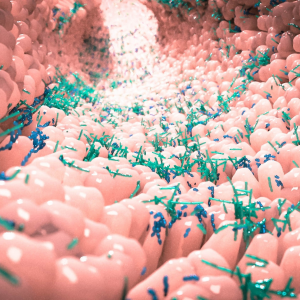
The good gut microbes do the following:
- Help break down food to liberate more nutrients
- Manufacture several vitamins such as B2, B9, B12 and K
- Inhibit disease causing bacteria
- Produce short chain fatty acids that provide fuel for intestinal cells
- Maintain the integrity of the intestinal lining
- Help with detoxification
- Offer improved gut immunity and modulate the immune system
- The gut is also becoming known as the second brain! Recent research has found the microbiota synthesise the neurotransmitters GABA and dopamine and stimulate gut cells to produce serotonin. In fact, 95% of the serotonin in the body is made in the gut. These neurotransmitters affect mood, cognition and pain. The gut bacteria Lactobacillus reuteri has been found to significantly increase oxytocin production in the brain which is involved with social bonding. This is showing positive results in children with autism. As we learn more we will find they also have a place in canine and feline behavioural disorders.
Leaky gut syndrome
Unfortunately, when our gut ecosystem starts to become unbalanced and there is lack of diversity or reduced numbers of microbes dysbiosis results. Gastrointestinal symptoms occur and general health is affected. In small animals this may cause chronic diarrhoea. With dysbiosis pathogenic bacteria damage the tight junctions between intestinal cells and bacteria and their toxins can make their way into circulation. This is called leaky gut syndrome and can contribute to chronic systemic inflammation. Many studies have shown that probiotics help to maintain intestinal lining integrity and reduce the likelihood of leaky gut syndrome. Dysbiosis has been found to be associated with an increase in metabolic and immune disorders. Diabetes mellitus, obesity, autoimmune conditions, atopic dermatitis and decreased resistance to infections are all more likely with dysbiosis. Dysbiosis is also associated with autism spectrum disorders, schizophrenia, anxiety and major depressive disorder. This is not surprising when gut health is so related to brain function.
Research has discovered some interesting findings from supplementing particular strains of probiotics:
- Improved immunity and development: Puppies supplemented with Lactobacillus had improved metabolism with a higher daily weight gain due to an increase in appetite and intake. Another group fed Enterococcus faecium SF68 from weaning to one year of age had improved immunity with higher serum IgA concentrations, a greater proportion of mature B cells and higher titres after distemper vaccination than control puppies.
- Faster recovery from gastrointestinal infections
- Faster recovery from acute nonspecific diarrhoea
- Prevention and treatment of stress-related diarrhoea
- Prevention and/or treatment of food and atopic allergies in people and dogs
- Several health benefits in various medical conditions in people such as irritable bowel syndrome, diarrhea, Helicobacter pylori infections, inflammatory bowel disease, gastroenteritis, depressed immune function, infant allergies, cancer and liver disease.
- Reduction of serum cholesterol levels in people.
- Prevention of urogenital infections in infants
What can disturb the gut microbiome?
As it happens, there are many ways to disturb the delicate microbiome. Antibiotics are indiscriminate and kill both good and bad bacteria. There are also many other medications that can upset the balance of the microbiome in humans and animals. Drugs such as meloxicam, carprofen, prednisone, anti-depressants and laxatives can all do this. Poor diets are also at fault. Fibre is fuel for our gut microbes and diets low in fibre and high in fat favour the growth of less beneficial bacteria. Certain gastrointestinal diseases and chronic stress will also play havoc with gut flora balance. Many of our older animals suffer from chronic stress associated with arthritis and chronic ailments. And they are also the group most commonly receiving daily medications. Supplementing with probiotics is a good idea for geriatric pets.
How is a healthy gut achieved?
If we want our pets to have the benefits of a great gut ecosystem they need to eat well and have a diverse gut flora. The latter can be achieved with probiotic supplementation. Probiotics are “live microorganisms which when administered in adequate amounts confer a health benefit on the host”. We need to be supplementing with strains of gut bacteria known to be specific for cats and dogs, alongside what are common to both humans and animals. Choose a probiotic supplement that has a variety of effective bacterial strains and one that is resistant to digestion by stomach acid and bile acids, so it can reach the intestines intact. The probiotics also need to be nonpathogenic and be able to adhere to the intestinal epithelium. Their number is also important with pets needing at least 1 x 10 (8) colony forming units (CFUs) in a supplement.
How to incorporate probiotics into your dogs diet
There is no point in supplementing probiotics without a good diet. Minimally processed diets that are balanced with meat, organs and vegetables will supply good digestible protein, be low in carbohydrates and have adequate fibre. Include food groups known to be prebiotics, which offer indigestible dietary fibre preferred by gut microbes as food. They are found in such foods as slippery elm, asparagus, banana, leafy greens, flax seeds and wheat bran. Most dogs will embrace such new additions to their diet. Just be sure to add in new things gradually so their guts can adapt to dietary changes. Cats are much fussier with vegetables but I’ve met many that love a few peas mixed in their food.
The World Health Organisation states “the symbiotic relationship that exists between gastrointestinal microbes and the host is critical for proper function of nutritional, developmental, immunological and physiologic processes in animals and thus contributes to host health”.
With such an important part to play in immunity, metabolism and overall gastrointestinal health there is no doubt that probiotics are nature’s little helper!

More Posts
Duke’s Story
Ciao, my name is Duke and I am an Italian boy. I was adopted by mom when I was 10.